
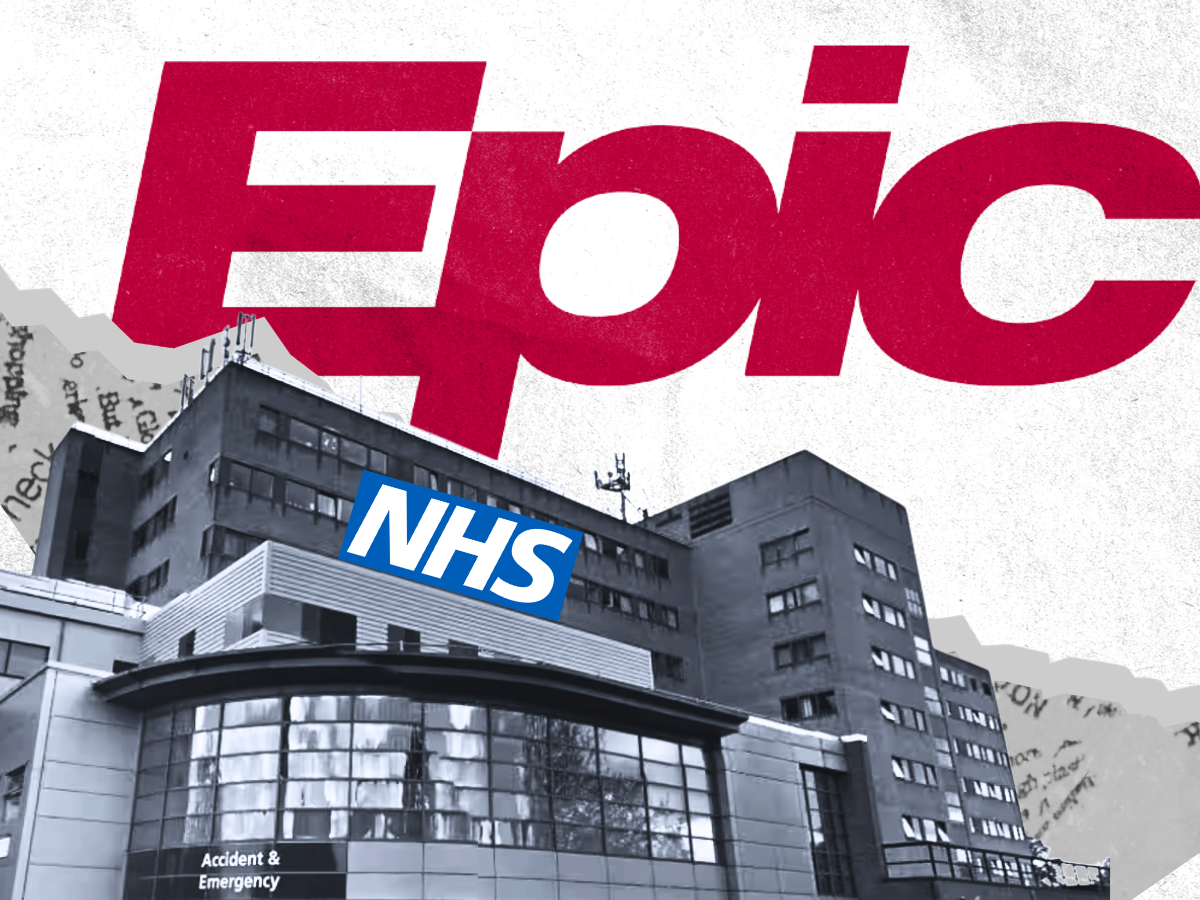
Frimley Health Foundation Trust has halted a planned trial of Epic Systems' native AI charting tool after it emerged the product lacked the regulatory registration required to operate in the NHS. Epic had planned to launch the trial of its AI Charting functionality at the trust this week, despite not holding Medicines and Healthcare products Regulatory Agency (MHRA) Class I medical device, a requirement for all AI scribing tools capable of summarisation. Frimley Health confirmed the trial did not go ahead, as it had not passed through the trust's internal governance processes, and has been paused pending further work.
Epic's AI Charting tool does not appear on the MHRA Class I medical device registry, and the company is also absent from NHS England's Ambient Voice Technology (AVT) supplier registry. That is not a technicality, it is the entire barrier. NHS England's guidance is clear that ambient scribing products using generative AI for summarisation are treated as high-functionality tools that qualify as medical devices, and any such product must be registered with the MHRA and regulated proportional to its risk classification.
Two other NHS trusts, understood to be one in the north of England and one in the east, are currently live with Epic's ambient voice technology. Several others, including University College London Hospitals, Birmingham Women's and Children's, the Royal National Orthopaedic Hospital Trust, are understood to be in conversations with Epic about trialling the same tool. Those conversations will now carry considerably more scrutiny.
Epic Systems is not some fringe tech vendor parachuting into the NHS. Epic and Oracle together cover approximately 45% of UK acute hospital trusts by population coverage. Between January 2024 and March 2025, Epic saw the biggest market share gain of any EPR provider in the NHS, rising by 3.5% to 9.7% of the acute trust market. Just weeks ago, four NHS trusts across Somerset and Dorset signed a £222m contract with Epic in early March 2026. The company is entrenching itself deeper into UK health infrastructure, which is exactly why a compliance gap of this kind sends a louder signal than it might otherwise.
The UK's position on AI scribing tools has actually been clearly articulated since mid-2025. A June 2025 priority notification from NHS England stated that any ambient voice tool performing clinical summarisation must hold at least MHRA Class I medical device registration, and that non-compliant deployments must be paused immediately. Frimley's halt is not a surprise, it is the system working as intended. What it does expose is the gap between how fast large vendors are moving commercially and how thoroughly they are meeting UK-specific regulatory obligations before doing so.
That tension is not unique to Epic. The British Medical Association warned earlier in 2025 that GPs should pause AI scribing tools unless data protection and safety checks had been completed, following a letter circulated by NHS England's national chief clinical information officer advising caution about ambient voice technology. Speaking at NHS CondExpo in June 2025, Health Secretary Wes Streeting acknowledged that some clinicians were already using ambient AI to record notes even where their practice or trust had not yet caught up, a sign that demand for these tools is running well ahead of governance.
The stakes are real. A 2024 Health Foundation survey found that 54% of the UK public and 76% of NHS staff support the use of AI for patient care, but that support depends on the tools being safe and properly overseen. Professor Henrietta Hughes, England's Patient Safety Commissioner and deputy chair of the National Commission into the Regulation of AI in Healthcare, has been direct on this point. "Patients bear the direct consequences of AI healthcare decisions, from diagnostic accuracy to privacy and treatment access," she said in December 2025, calling on the public and industry alike to engage with how these systems are regulated.
For anyone watching the uk tech sector, this is the friction point that keeps surfacing, speed of commercial deployment versus robustness of UK-specific compliance. It is not anti-innovation. UK AI safety conversations have consistently landed on the same principle: move fast, but within a framework that the public can trust. The MHRA's National Commission on the Regulation of AI in Healthcare, which includes experts from Google, Microsoft, and leading NHS clinicians, is due to publish a new regulatory rulebook for AI as a medical device in 2026. That framework will define the ground rules for every ambient voice tool, diagnostic algorithm, and clinical summariser operating in the NHS going forward.
The UK digital health market was valued at $15.46 billion in 2025 and is projected to reach $43.98 billion by 2031, an enormous commercial opportunity that vendors understandably want to access early. But UK AI law is increasingly making it clear that early access and corner-cutting are not the same thing. The Frimley case is a reminder that NHS trusts now have sharper tools for governance, and that they are using them.
For the developers, entrepreneurs, and health tech operators building in this space, the message is straightforward: MHRA Class I registration is not optional paperwork. It is the price of admission.
Nothing to preview yet...
Commenting as guest. to reply and like comments.
No comments yet. Be the first to comment!