
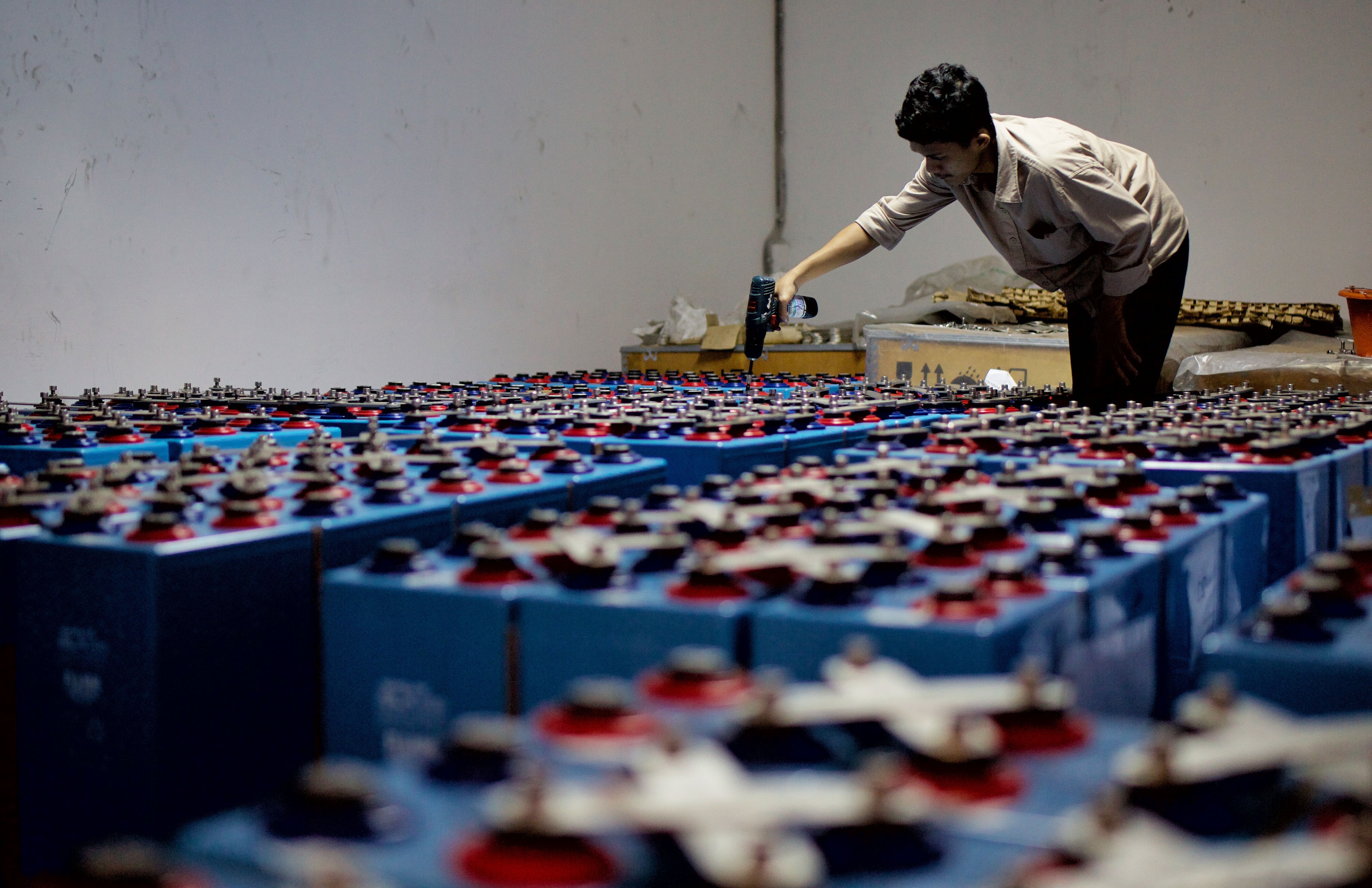

Ofgem is due to confirm before the year ends which long-duration energy storage projects win support under its cap and floor scheme, and lithium-ion batteries hold 11 of the 16 places on the provisional list.
The regulator published the list on 26 June as "minded-to" decisions, closed its consultation on 7 August and said final determinations are expected later this year. A cap and floor scheme guarantees a project a minimum revenue in return for limiting what it can earn, and eligible storage must be able to discharge for eight hours or more. The 16 projects total 7,645MW, and the 11 lithium-ion sites make up about 3.6GW of that, alongside three pumped hydro schemes, one compressed air project and one vanadium flow battery.
“This takes us a step closer towards the long-duration energy storage we need in a clean power system,” said Akshay Kaul, Ofgem's director general for infrastructure, when the shortlist was announced.
“Europe risks sleepwalking into a series of economic and geopolitical national security problems,” warned Michael Collins, a former deputy head of national security strategy at the UK Cabinet Office, in a report co-written with Michal Meidan of the Oxford Institute for Energy Studies. It found China supplies 88% of Europe's lithium-ion battery imports. The same report rated a remote shutdown of green technology "very unlikely" unless China were at war or close to it, but judged supply disruption "likely".
The risk that keeps returning in UK tech circles is software rather than chemistry. German security firm Jakkaru said it could reach Sungrow solar systems worldwide through the company's cloud platform. Sungrow patched the flaw on 25 August and says it has no evidence anyone else exploited it. The case involved solar inverters, but it shows why cloud-connected grid equipment is now a cyber question as much as an energy one.
British manufacturers are also reacting. Only one vanadium flow project made the list, Frontier Legacy in north Wales, and Invinity chief executive Jonathan Marren has called the shortlist out of step with the government's broader ambitions. The company is reconsidering expansion of its UK manufacturing, while Ofgem has said it is not chasing technology diversity at all costs.
Location adds a data centre angle. Seven of the 16 projects, totalling 5.1GW, sit in north Scotland. The government's AI Growth Zone policy offers eligible data centres energy discounts of up to £24/MWh there from April 2027, where they help reduce grid constraint costs. That makes a storage subsidy UK tech news, because AI compute, cloud hosting and the apps people use to bank, stream lectures or book a GP all draw on the same grid, and the wider UK tech sector is increasingly competing for that power.
The list is provisional, so the 11 lithium-ion places are not settled until Ofgem publishes its final decision.
Previously reported by TechOrbit, GCHQ warned that Russia is targeting UK infrastructure and tech.
In a related development, we covered Iranian hackers shutting down a UK power plant for four days.






Nothing to preview yet...
Commenting as guest. to reply and like comments.
No comments yet. Be the first to comment!