
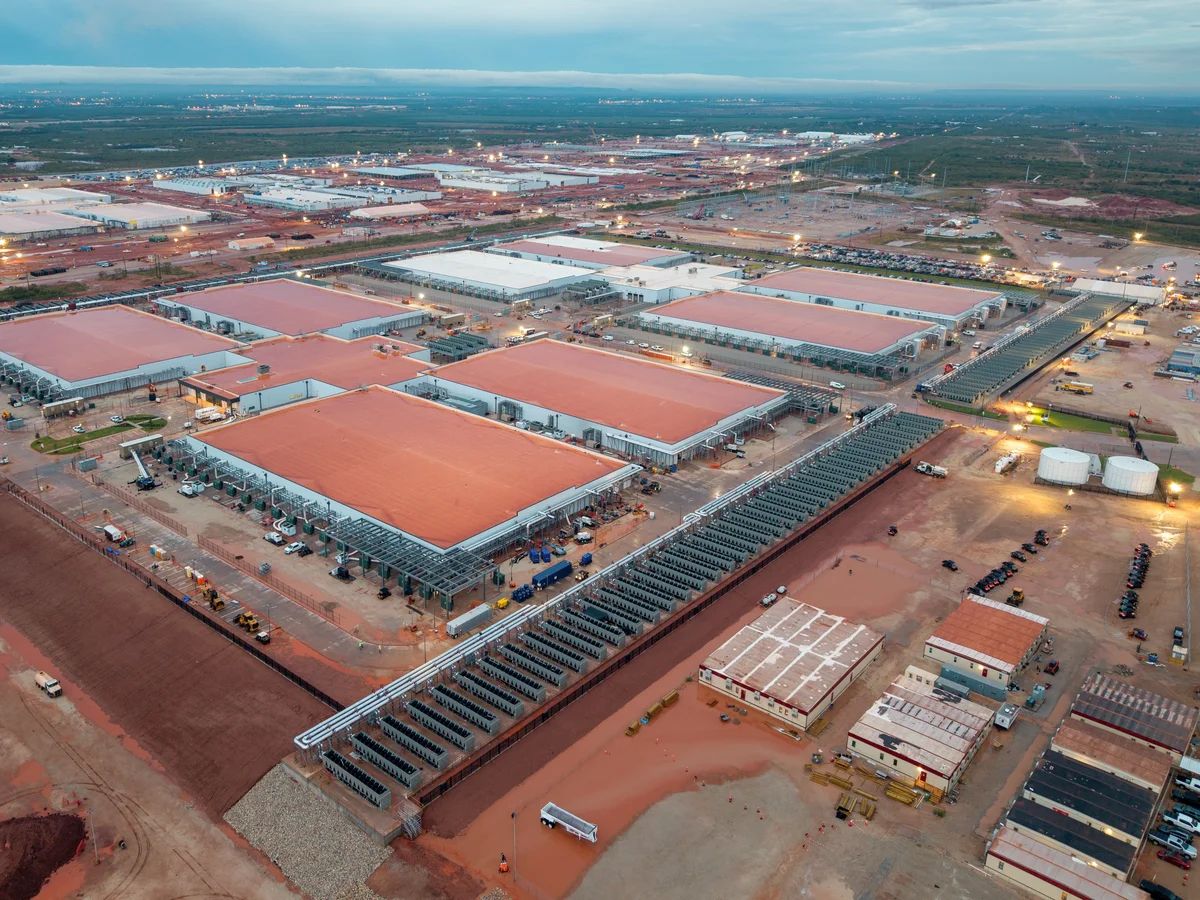
The UK's most high-profile AI infrastructure bet is on hold. OpenAI confirmed last week it is pausing the Stargate project UK, the data centre initiative announced in September 2025 alongside Nvidia and Nscale that was meant to be the centrepiece of the country's AI infrastructure push. The pause was first reported by Politico and confirmed by OpenAI in a statement to CNBC. No timeline has been given for when or whether it resumes.
The project, which sat within a broader £31bn "Tech Prosperity Deal" between the UK government and major US tech firms, had been designed to deploy up to 8,000 GPUs at a site in Cobalt Park, North Tyneside, with plans to scale to 31,000 GPUs over time. That capacity was intended to allow OpenAI's models to run on sovereign British computing power, with use cases spanning the NHS, financial services and national security. It missed its Q1 2026 GPU deployment target.
OpenAI's own statement gave the clearest signal of where talks stand: "AI compute is foundational to that goal, we continue to explore Stargate UK and will move forward when the right conditions such as regulation and the cost of energy enable long-term infrastructure investment."
The energy problem is real and documented. UK Government data for the first half of 2025 confirmed that the country has the highest industrial electricity prices in Europe, more than four times those in the US, Finland, Norway, and Sweden. Wholesale electricity prices in the UK rose 40% year-on-year in the first half of 2025, averaging just under $115 per megawatt hour. For a data centre running at the scale OpenAI was planning, that differential doesn't register as a line item, it changes the fundamental economics of the whole operation.
There is also a grid access problem that goes beyond pricing. Demand queue applications to connect to the national grid surged from 41 gigawatts in November 2024 to 125 gigawatts by June 2025. For context, peak electricity consumption across Britain on a cold February day is around 45 gigawatts. Data centres currently face connection wait times of five to ten years in the UK, with some projects being told they won't be connected until the 2030s. A Guardian investigation also found that development hadn't started at the Nscale-linked Tyneside site, with land records showing the site remained a scaffolding yard under a different company's ownership, raising further questions about how shovel-ready the project actually was.
The copyright question has added a third layer of friction. The UK government had been considering allowing AI companies to train models on copyrighted material under a broad opt-out system. The creative sector pushed back hard, and a government report in March found the majority of consultation respondents rejected the exception outright. That unresolved tension sits directly in OpenAI's path: without clarity on what training data it can legally use on British soil, long-term infrastructure investment becomes harder to justify.
For anyone watching uk tech closely, this is a stress test the sector didn't need right now. The country has positioned AI infrastructure as central to its growth agenda. The government has attracted over £100bn in private investment since taking office, and the OpenAI Stargate project was meant to anchor the credibility of that pipeline. Its pause hands critics a clear talking point: that the UK's AI ambition has run ahead of its ability to deliver the underlying conditions, affordable power, grid access, and regulatory certainty, that actually make these investments viable.
That concern extends well beyond the tech industry. Students entering computing or engineering courses, professionals whose industries are being reshaped by AI, NHS staff waiting on AI-assisted diagnostics, small businesses thinking about AI tools, all of these groups have a stake in whether the UK can build and host the infrastructure that AI runs on, or whether it becomes permanently dependent on compute capacity built and owned elsewhere.
The government isn't conceding ground. A spokesperson said the focus "is on continuing to create the right conditions for investment in the UK's AI and data centre infrastructure," and confirmed ongoing dialogue with OpenAI and other AI companies. UK businesses across sectors have been building AI adoption strategies on the assumption that sovereign UK compute would be part of the picture. That assumption now carries more uncertainty than it did six months ago.
What makes today's news more layered is that OpenAI, on the same day, announced it is opening its first permanent London office, an 88,500 square foot space near King's Cross with capacity for more than 500 staff, more than doubling its current UK headcount. London remains OpenAI's largest research hub outside the US. The company is clearly not walking away from Britain; it is choosing talent over infrastructure, for now. That distinction matters. Research hubs create jobs and generate IP. Data centres create sovereign compute capacity and shape which country has strategic control over AI infrastructure at scale. The UK is being offered one without the other.
The broader OpenAI Stargate project in the US carries a $500bn commitment over four years. The UK version was always going to be smaller, but it was supposed to signal that the UK is where serious AI infrastructure gets built. Instead, the conversation has shifted to when the conditions might be right rather than how the build gets done. For the UK tech sector, energy reform, grid reform, and copyright clarity were already important policy questions. The Stargate pause has made them urgent ones.
Nothing to preview yet...
Commenting as guest. to reply and like comments.
No comments yet. Be the first to comment!