
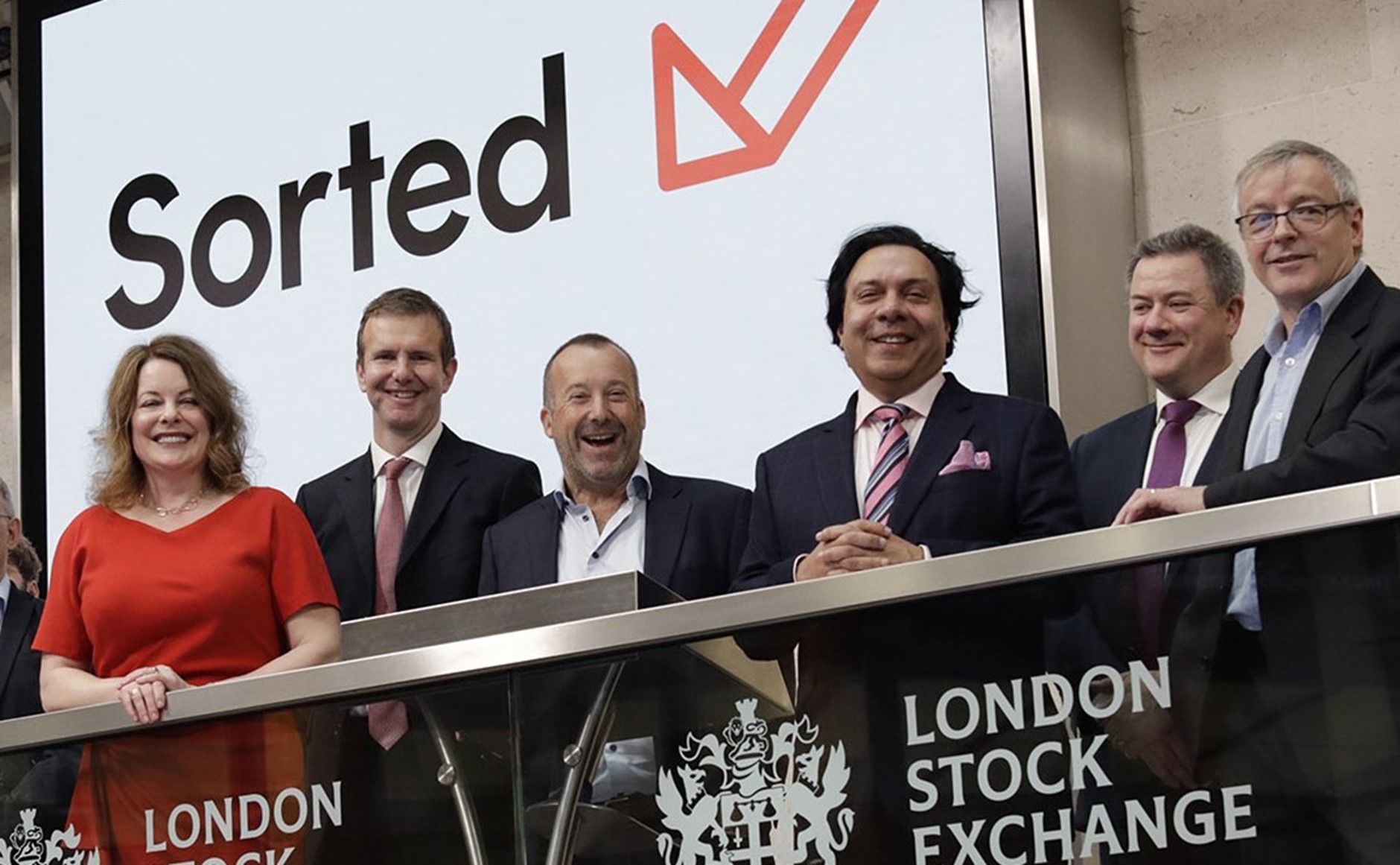
Sorted Group Holdings raised nearly $100 million. It was named by the Financial Times as one of the fastest-growing companies in Europe. Its clients included M&S, Asda, and Boohoo. This week, the board agreed to sell the entire business for £1.
That is not a typo.
On 2 April 2026, Sorted Group Holdings plc, listed on AIM under the ticker SORT, announced it would offload its main operating company, Sorted Group Ltd, to a Bristol-registered entity called Brislington Holdco Limited for a nominal cash consideration of one pound. Subject to shareholder approval, the deal is expected to complete by the end of June. The share price halved to 10p on the day of the announcement.
The board's explanation, filed directly to the London Stock Exchange, was blunt: "The board believes that committing further significant investment towards enhancing elements of the business is not in the best interests of shareholders."
For anyone watching the UK tech scene, that sentence carries weight well beyond one company.
Sorted Group Holdings plc was founded in Manchester in 2010 by David Grimes, started, as the story goes, from his parents' kitchen table, and built into a delivery experience platform that let major retailers manage shipping, track parcels, and optimise their checkout and returns infrastructure. By 2021, it had 243% year-on-year growth, was operating across multiple countries, and had just closed a $40m Series C round led by Chrysalis Investments. The FT listed it among Europe's fastest-growing companies. It had the momentum, the clients, the capital, and the Manchester address that the northern tech scene was proud to put forward.
Then came the gap between growth and profit that has quietly ended more UK tech stories than most people notice.
The company reported a pre-tax loss of £28.6m in the year to September 2022. Despite a major restructure, headcount slashed from 90 to 37, the London office closed, the Clicksit returns app sold off for £775,000, it never crossed into profitability. Revenues in the first half of 2025 came in at £2.42m, still falling from £2.76m the year before. In total, Sorted Group Holdings plc absorbed approximately £71.07m in equity investment and £4.36m in debt financing across its lifetime. The business being sold for £1 this month has consumed more capital than most people will earn in several lifetimes, and it never once returned a profit.
In 2024, Location Sciences completed a £66.73m reverse takeover of the platform, Sorted Group Holdings was admitted to AIM in February of that year, with investors including Boohoo Group founder Mahmud Kamani and Zeus Capital founder Richard Hughes. The newly appointed chairman, Simon Wilkinson, said at the time: "It's been a long road to complete this transaction but all along we've believed that Sorted has the potential to once again be a leading player in the eCommerce space." Two years later, the board that backed that belief is selling the operating business for the price of a coin.
The buyer, Brislington Holdco Limited, is owned by investor Mahmoud Atalla. It is the same entity that controls Bristol-based Huboo, a fulfilment company that was itself acquired as a distressed purchase in 2025 for £9. Two of the most heavily funded ecommerce logistics and fulfillment tech businesses in the UK, each taken over for less than a tenner combined, are now likely to sit under the same ownership. That pattern is not random. It is what happens when growth-phase SaaS businesses run out of road and runway at the same time.
This matters to uk tech more broadly because Sorted is not an outlier, it is a mirror. The UK ecommerce market is now valued at over $317 billion and is projected to reach more than $504 billion by 2031. Delivery infrastructure is not a niche. Every package that leaves an M&S warehouse, every Boohoo return, every Asda click-and-collect confirmation, that is the market Sorted was built for. That market is still growing. The demand was never the problem.
The problem is that building the technology layer underneath a market and turning that into a profitable business are two entirely different things, and the UK has been learning that lesson at scale. Total startup funding in the UK dropped to £16.2 billion in 2024, down 35% from 2022, the lowest since 2020. The era when ambitious growth numbers could keep a fundraising story alive indefinitely is over. Investors now want to see the path to profit, and the average journey from a UK startup's launch to Series C has nearly doubled to 9.6 years. Sorted never made it to the other side.
What this also signals for the UK's regional tech scene is harder to ignore. Manchester has genuine credentials, it is one of the few cities outside London with a sustained track record of producing investable Scottish tech and regional companies that punch beyond their postcode. But the Sorted story reveals the limits of what proximity to capital and ambition alone can produce when the fundamentals of a business model do not work at scale. The question for every founder building in the North right now is not whether they can raise, it is whether the unit economics actually hold when the growth slows.
Following the disposal, Sorted Group Holdings plc will become an AIM cash shell, renamed SGH plc, with monthly operating costs of roughly £18,000 and six months to complete an acquisition or face suspension from the exchange. The holding company that once sat atop a business valued in the tens of millions will now essentially be a listed vehicle looking for something to do next.
For the 37 remaining employees, their outcome depends on what the new owners make of the platform. For the clients, retailers who have integrated Sorted's technology into how they handle delivery, the continuity of that service is now in the hands of a buyer who picked it up for one pound.
The platform still exists. The software still works. The clients are still there. Whether anyone can make it commercially sustainable is the question that over £75m in investment could not answer, and that is the conversation the UK's tech industry needs to keep having.
Nothing to preview yet...
Commenting as guest. to reply and like comments.
No comments yet. Be the first to comment!