

Most founders hear "PR" and picture a press office, a launch party and a budget they do not have. Digital PR works on a different principle. It rewards a sharp story, a useful number and a bit of patience far more than it rewards spend, which is why it suits small teams so well.
This guide covers what digital PR is, how it differs from traditional PR, the tactics that earn coverage, how to run a campaign from scratch and how to tell if it worked.
Key takeaways
- Digital PR is the practice of earning coverage, mentions and links from credible online publications instead of buying them.
- A workable digital PR strategy starts with a clear goal, a story journalists can use and a pitch list built around who actually covers your topic.
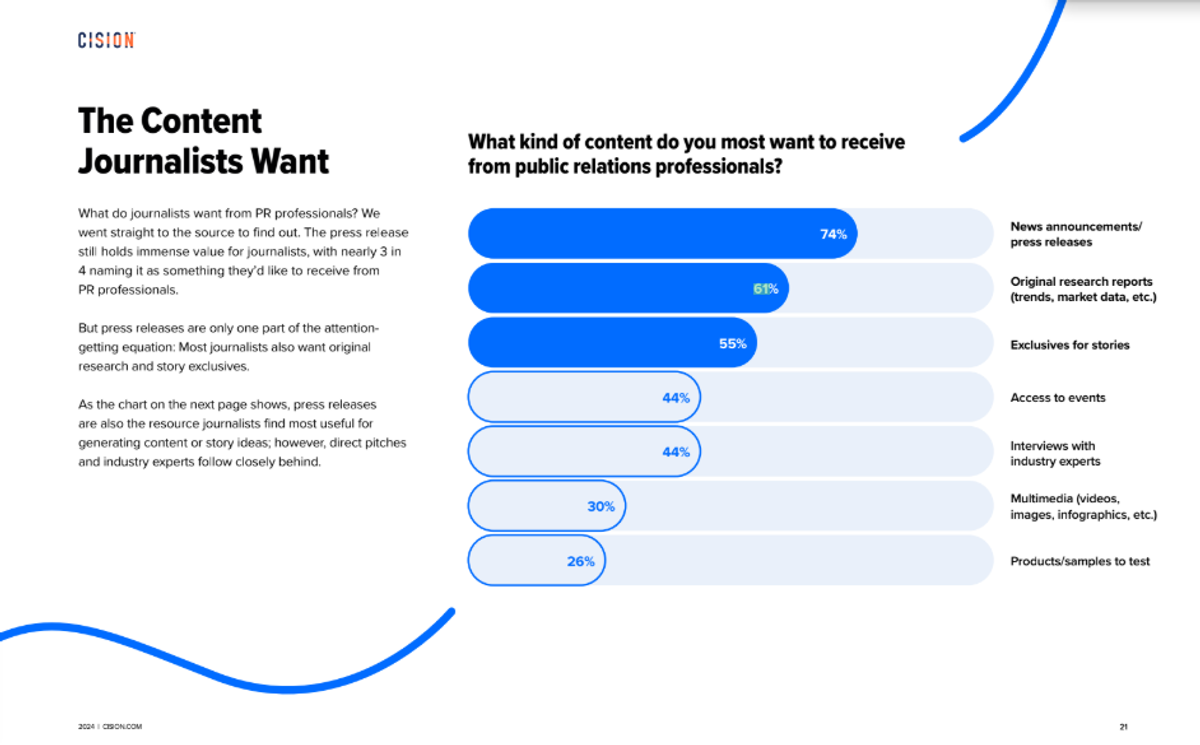
- Original data is one of the strongest assets you can offer. In Cision's 2024 survey, 61% of journalists said they want original research from PR professionals.
- Digital PR and SEO work together, because quality coverage can bring backlinks, referral traffic and credibility at the same time.
- Measure what you earn, from brand mentions and sentiment to referring sites and branded search, and adjust every month.
What is digital PR?
Digital PR, sometimes called online public relations, is the work of building a brand's visibility and reputation through media coverage, quality backlinks and positive mentions across digital channels.
Digital PR involves more than getting a business mentioned in online publications. It requires creating content that attracts media attention, building relationships with journalists and publishers, pitching relevant stories and monitoring coverage and brand mentions afterwards.
That is the digital PR definition in plain terms. You give journalists something they can use, and in return you earn the kind of third-party credibility that advertising cannot buy.
It also helps to separate digital PR from link building. Link building focuses on acquiring backlinks. Digital PR marketing is wider, because it aims at mentions, audience engagement and lasting relationships with publishers, and links tend to follow as a result.
Now that we have answered the question “what is digital PR” lets move on to the difference between digital PR and traditional PR.
Digital PR vs traditional PR
Traditional PR leans on print, television and radio. Digital PR takes the same instincts online, using press releases that live on the web, expert comment, data-led stories and social channels, and it is far easier to track. You can see who linked, who clicked and who searched for your name afterwards.
The two are not rivals. A product launch can earn a mention in a newspaper and a feature on a technology site, and the online piece may keep sending traffic for months.
P.S. We have a detailed guide on startup marketing strategy that shows where digital PR sits among the other channels a young company can use.
Why your business needs a digital PR strategy
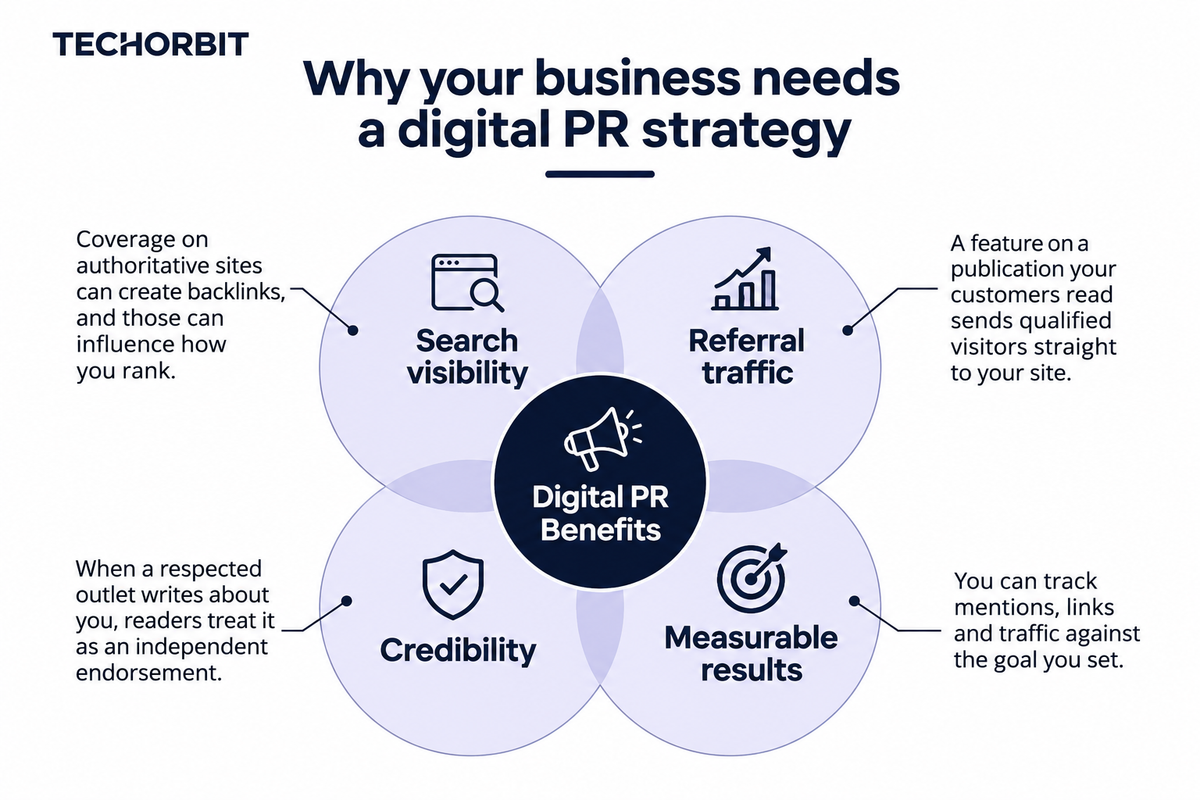
The benefits of digital PR come down to four things.
- Search visibility. Coverage on authoritative sites can create backlinks, and those can influence how you rank.
- Referral traffic. A feature on a publication your customers read sends qualified visitors straight to your site.
- Credibility. When a respected outlet writes about you, readers treat it as an independent endorsement.
- Measurable results. You can track mentions, links and traffic against the goal you set.
On digital PR and SEO specifically, the link between the two is simple. Search engines treat links from trusted sites as a signal, and journalists are the people who give them out. A single well-placed article can keep delivering traffic and credibility long after the day it runs.
Digital PR for startups carries an extra advantage. A young company rarely has an advertising budget that can compete with established names, but it can have a fresh angle, real customer data and a founder with something to say.
Across UK tech, where launches and funding announcements are common, the teams that get noticed tend to be the ones who bring a number or a point of view alongside the announcement.
The digital PR strategies that earn coverage
Not every tactic suits every business. These are the ones with the strongest track record.
1. Press releases
The press release is still the most requested type of content among journalists. In the MarketingProfs summary of Cision's 2024 findings, 74% of journalists said they want to receive news announcements and press releases. Keep yours short, factual and built around something that is genuinely new.
2. Media outreach and journalist pitching
Journalists are busy. Cision's 2024 report found that one in two journalists receives more than 50 pitches a week, and the 2026 edition found that 72% say fewer than a quarter of the pitches they get are relevant to their beat.
Relevance wins. Read what a reporter has written recently before you write to them.
The journalists surveyed by Cision in 2024 ranked original research reports among the content they most want from PR teams, and 61% said they want to receive it.
3. Original research and data-led campaigns
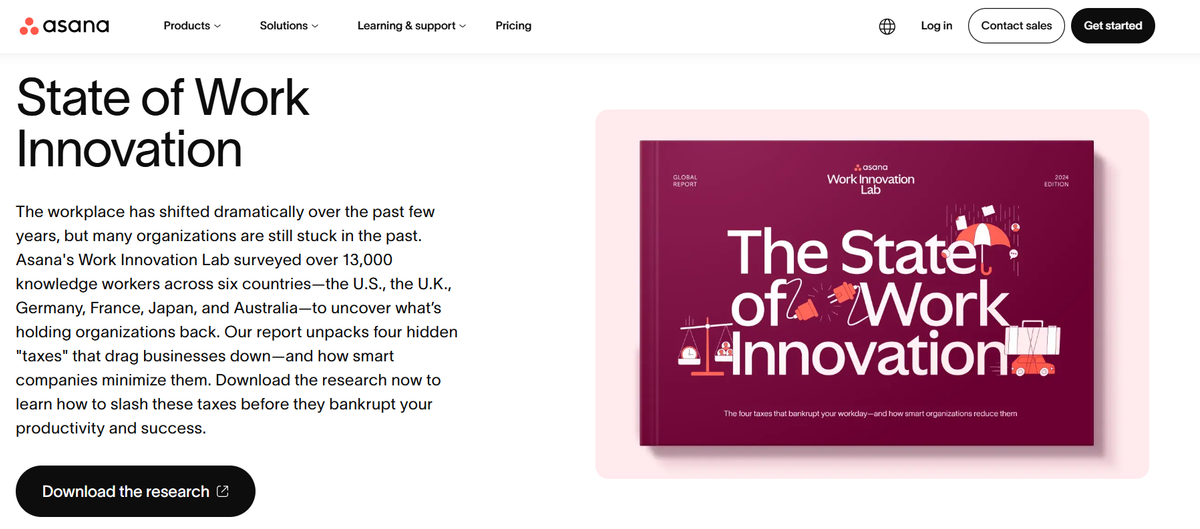
Data gives a journalist a headline and a reason to run it. Asana's 2024 State of Work Innovation surveyed more than 13,000 knowledge workers across six countries, and in fact, Semrush notes it earned coverage in outlets such as VentureBeat and Forbes.
Your own research does not need that scale. A survey of 300 customers, or an analysis of your own anonymised usage data, can be enough if the finding is clear.
4. Thought leadership and expert contributions
If you know a subject well, offer comments when reporters are working on it.
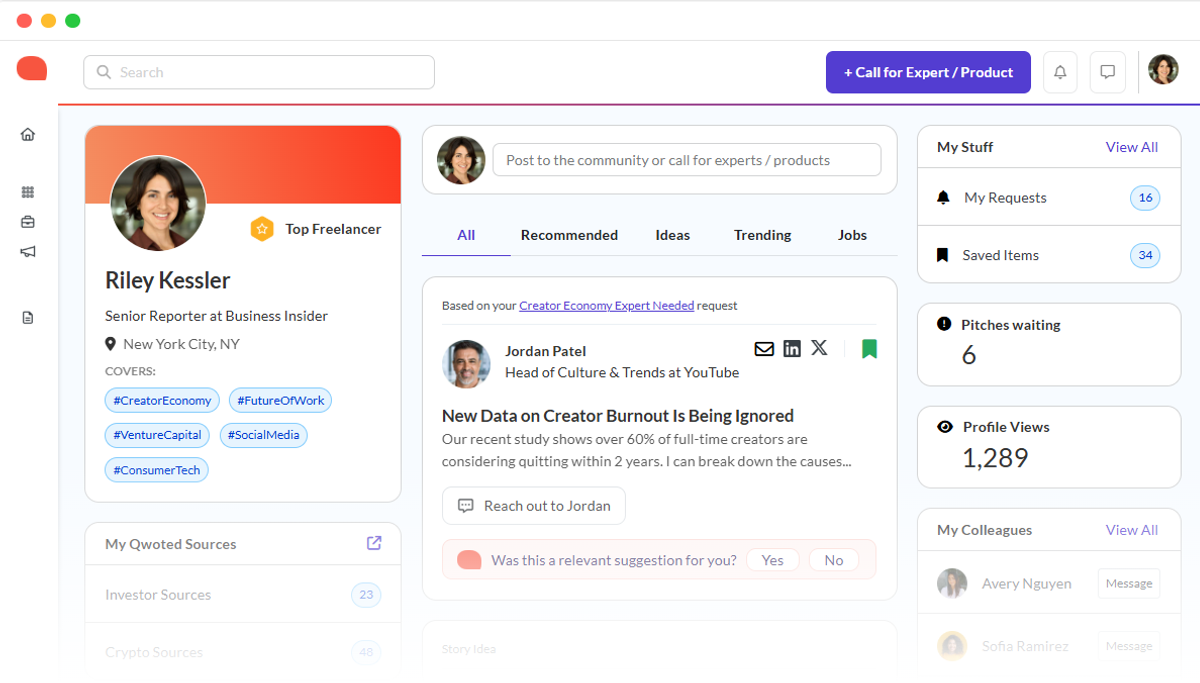
Platforms such as Qwoted connect journalists with experts.
You can also email reporters directly with a view you are willing to put your name to.
5. Creative campaigns and newsjacking
A strong UK example is Virgin Media O2's Daisy, an AI "granny" that answers calls from fraudsters and rambles on to keep them away from real victims.

It gave a widely shared worry, fraud, a character and a story, which is what journalists look for.
According to the agency Don't Panic London, the campaign earned more than 1,800 pieces of coverage worldwide and won Gold at Cannes Lions 2025 in the PR for Use of Technology category.
It worked because it paired a useful idea with a problem people were already worried about.
Your version needs no AI or big budget, only a problem your customers share and a fresh way to show it.
6. Brand mentions in digital publications
Even an unlinked mention builds familiarity, and over time it adds to the sense that your company is a name worth searching for.
P.S. For a closer look at the tactics a technology company can pair with PR, read our piece on tech startup marketing strategy.
How to do digital PR from scratch
If you are wondering how to do digital PR without an agency, work through these steps in order.
- Pick the one thing the campaign must achieve: Coverage, referral visits and links call for different stories, so choose one and decide in advance how you will count it.
- Find out where your customers get their news: Ask a few of them which sites, newsletters and groups they actually read, then build your target list from those answers instead of guesses.
- Look for the story only your business can tell: Think about the numbers you hold, the shift in customer behaviour you see before others do and the question people keep asking you that nobody has answered well.
- Make the story easy to cover: Put the main finding in a short summary, add a few usable images, explain how any data was gathered and name a contact who can be reached the same day.
- Choose reporters who already write about your topic: Read what each one has published in recent months and note the angle they took. A short list of well-matched names beats a long list of loosely matched ones.
- Write a pitch that respects their time: Lead with the news, say why their readers would care now, include a figure or two and offer a clear next step, such as an interview or the full data.
On follow-ups, restraint pays. In Cision's 2024 survey, 64% of journalists said they only want one follow-up.
One more point on pitching in the age of AI tools. Cision's 2026 findings show 53% of journalists oppose AI-generated pitches over concerns about accuracy and personalisation. Use AI to tidy a draft if you like, but the thinking and the personal touch should be yours.
P.S. If your customers are other businesses, our guide to B2B startup marketing strategy explains how to shape the story for them.
How to use news publications for digital PR
Press coverage is the centre of any digital PR strategy, so it pays to know how to approach a publication properly.
1. Getting featured
Editors respond to news, data and informed comments. A funding round, a product launch, a hiring milestone, a research finding or an expert view on a story already in the headlines all give them a reason to write.
2. Press release submissions
Send the release with the key facts in the first paragraph, a quote from a named person and a contact who will pick up the phone.
3. Founder and brand features
A founder profile works best when it carries a lesson, a surprising number or a decision other founders can learn from, rather than a company history.
4. Sponsored features
These are a separate route, and they should not be confused with earned coverage. On TechOrbit, any paid content is clearly labelled as an advertisement, advertorial or sponsored content, and our editorial decisions stay independent of advertisers and sponsors.
Working with technology outlets like TechOrbit for digital PR
A feature on a news platform that covers UK technology does something your own website cannot. It puts your story in front of readers who already follow the sector, it carries the credibility of an independent editor's decision, and it can bring a mention and a link from an established publication.
That is the core of digital PR, and for a small company it is often the quickest way to be seen as a name worth trusting.
Outlets like TechOrbit publish news, analysis and commentary on UK technology and business, so the routes are the ones covered above. A press release about a launch or funding round, expert comment on a story already in the headlines, a data study with UK findings or a founder feature built around a lesson all give an editor something to work with. Put the UK link in the first line, and if your news ties into the wider UK tech sector, say how, because a story that arrives with context is easier to place.
To put a story to TechOrbit, email hello@techorbit.uk with the news or content theme in the subject line and the key facts in the first paragraph.
P.S. For real-world campaign thinking, take a look at our breakdown of a startup marketing strategy example.
How to measure a digital PR campaign
Decide what success looks like before you pitch, then track it monthly. The usual measures are
- media mentions and the quality of the outlets behind them
- backlinks and referring domains
- referral traffic from the coverage
- branded search volume, meaning more people searching for your name
- sentiment, meaning whether mentions are positive or negative
- social shares of the coverage
A free place to begin is Google Alerts, which emails you when your brand name appears on the web.
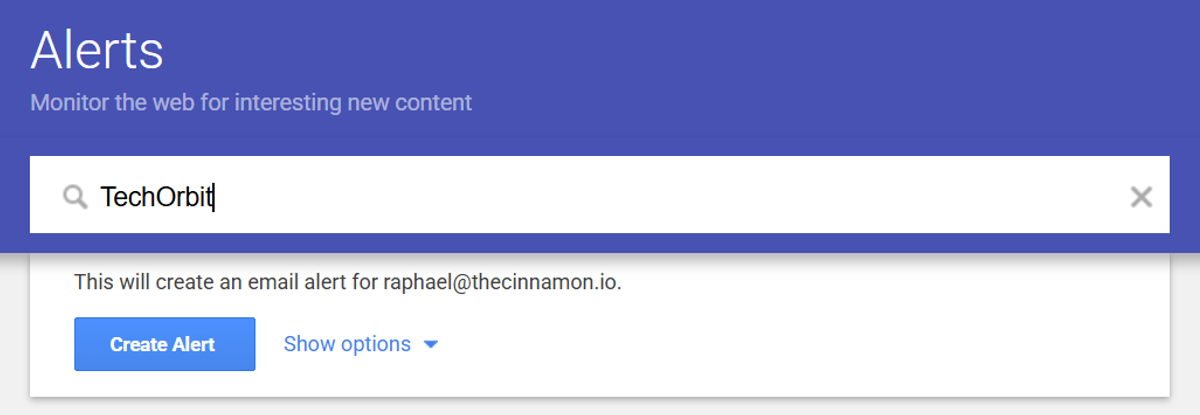
Paid tools add sentiment and reach.
Whatever you use, compare against the objective you set, because a campaign that earned ten mentions and no traffic may have missed a goal that a smaller campaign would have hit.
Five digital PR questions people keep asking
These questions come up repeatedly in discussions on Reddit, Quora and LinkedIn.
Digital PR: Does it Ever Work?
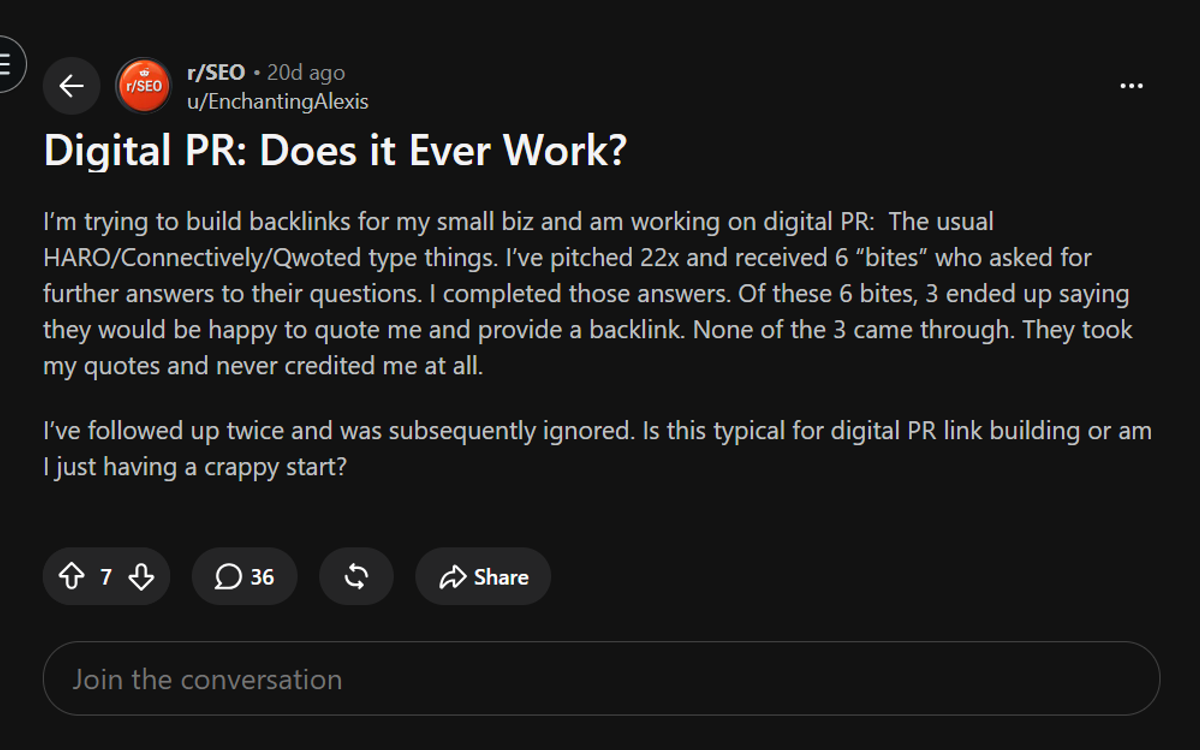
Yes, it works, and what you describe is common, so this is not a crappy start. Six replies from 22 pitches is a solid response rate for cold outreach. The part that failed is the credit, and that sits mostly outside your control. A journalist who says they will happily link to you is giving a courtesy, not a commitment, and many outlets have style rules that remove links or cap how many they allow.
To improve your odds, check the outlet's link policy before you invest time in a long answer, and say plainly in your reply that you would appreciate a credit with your name and company. Once the piece is live, send one short, polite note asking for the credit to be added. Cision's 2024 survey found 64% of journalists want no more than one follow-up, so a third nudge costs you goodwill.
Also treat a named mention without a link as a partial win, because it still builds familiarity with your brand. For stronger odds of a link, pitch original data of your own. A journalist who cites a survey has a reason to point readers to the source.
Digital PR? Does it actually help with AI search?
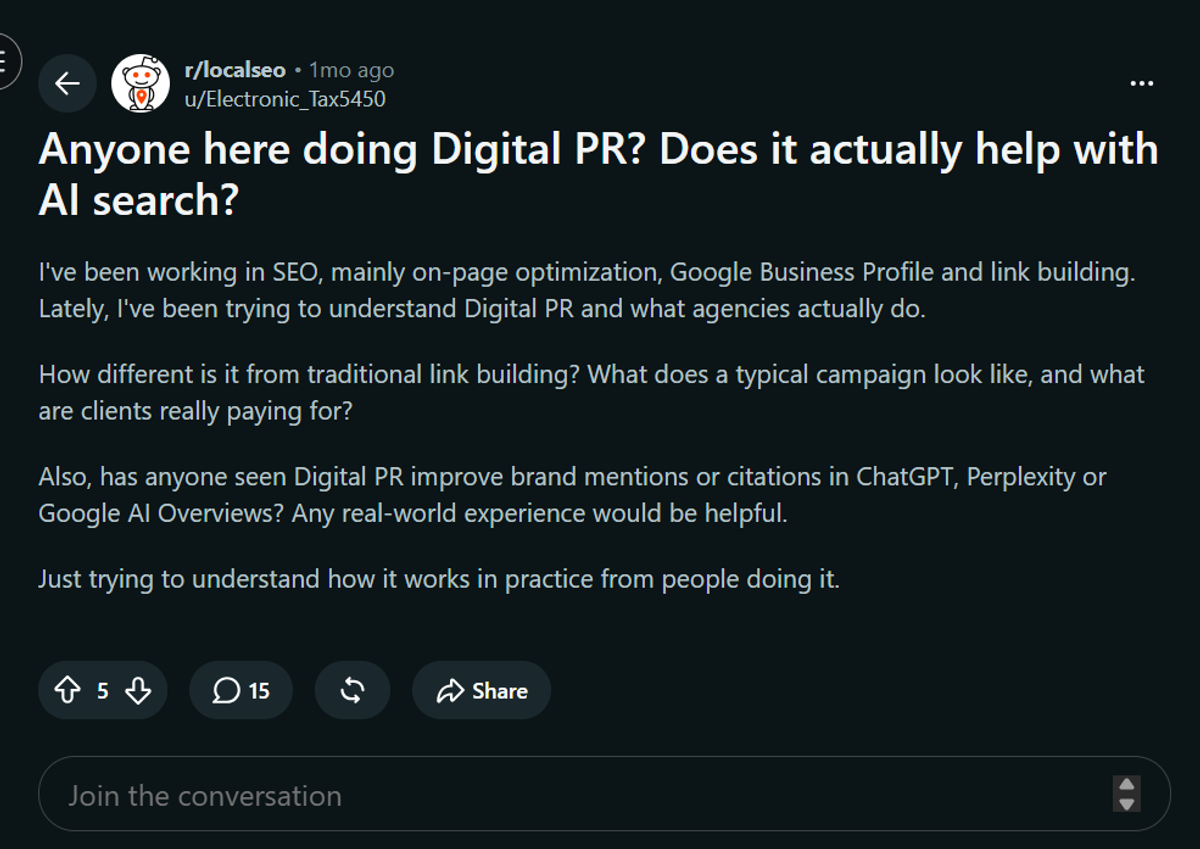
The honest answer is that proof is still thin. AI tools draw on web content, so being mentioned by credible publications gives them more places to find your brand, and that is a reasonable thing to expect. But no one can promise citations in ChatGPT, Perplexity or Google AI Overviews.
If you want evidence, record the prompts your customers would use before a campaign, check them again afterwards and note any change in the brands and pages cited.
How important is media relationship building for Digital PR?
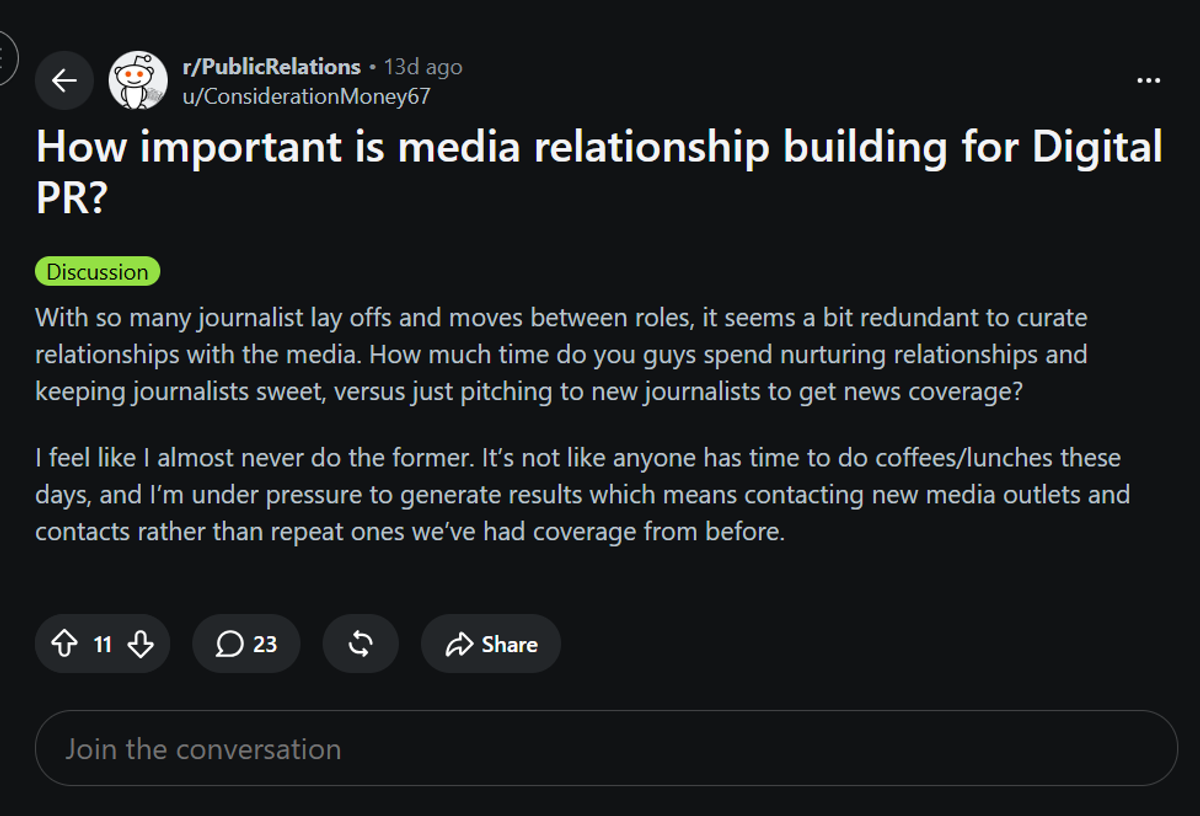
Relationships still help, but they do not require coffees or lunches. Cision's 2026 report found that 72% of journalists say fewer than a quarter of the pitches they receive are relevant to their beat, and the same research found that 66% rely on PR content for story ideas. Relevance and usefulness count for more than familiarity.
A workable split is to spend most of your time on new outreach and keep a short list of journalists who have already covered you. Write to them when you have something that fits their beat, reply quickly when they ask for help and follow them when they change outlets. Layoffs and job moves make that list worth updating, but it should take minutes a week and not hours.
Other questions we thought you might have
How different is digital PR from traditional link building, and what are clients paying for?
Link building aims at the link itself, often through outreach, guest posts and directories. Digital PR aims at coverage, mentions and reputation, and links follow. A typical campaign starts with an angle, such as a survey, a data study or expert comment.
The team then builds the asset, assembles a list of journalists who cover the subject, pitches them and reports on the coverage and links earned. Clients are paying for the idea, the data work, the writing and the relationships behind the pitching.
Do I need a digital PR agency or can I do it myself?
You can do it yourself, and most small businesses should start that way, because the core work is a good story, the right reporters and a clear pitch.
An agency makes sense once you have the budget and need campaigns at scale. Either way, relevance decides the outcome, since 72% of journalists say fewer than a quarter of the pitches they receive fit their beat.
Can AI write my digital PR pitches?
AI can help with a first draft, but it should not write the pitch you send. Cision's 2026 findings show 53% of journalists oppose AI-generated pitches because of concerns about accuracy and personalisation. Use AI to tighten wording and check your figures, then add the specific reason the story suits that reporter yourself.
Start with one story worth telling
You do not need a big team to begin. Pick the single most interesting thing your business knows, whether that is a customer finding, a market shift or a lesson from your own mistakes, and turn it into a short pitch for three reporters who already cover the subject. If one replies, you have started building the relationships that make every later digital PR campaign easier.
Nothing to preview yet...
Commenting as guest. to reply and like comments.
No comments yet. Be the first to comment!